Customer Stories: Utah Neurofeedback Consortium
Meet the Utah Neurofeedback Consortium in Murray, UT!
One of the greatest strengths of the neurofeedback community is its willingness to learn, share, and grow together.
While neurofeedback has been used clinically for decades, practitioners continue to deepen their understanding of the brain through hands-on experience, research, and collaboration. Ongoing education and peer support play an essential role in helping clinicians provide the best possible care for their clients.
The Utah Neurofeedback Consortium was created with that intention, offering a structured space for clinicians to stay connected, share clinical experiences, and continue learning from one another.
As Carrie Scott of Utah NeuroWellness and Healing Pathways Therapy Center shares, “Neurofeedback is always evolving, and there is tremendous value in hearing what others are seeing in their practices.”
A Community Built on Connection
The consortium originally began forming through informal collaboration around 2021, but later went dormant before being intentionally revived and restructured in the past year and a half.
The renewed group was built by clinicians already active in the Utah neurofeedback community, including connections through Healing Pathways Therapy Center, where many of the in-person meetings are now held.
What began as a simple effort to reconnect local practitioners has grown into a consistent rhythm of collaboration and shared learning.
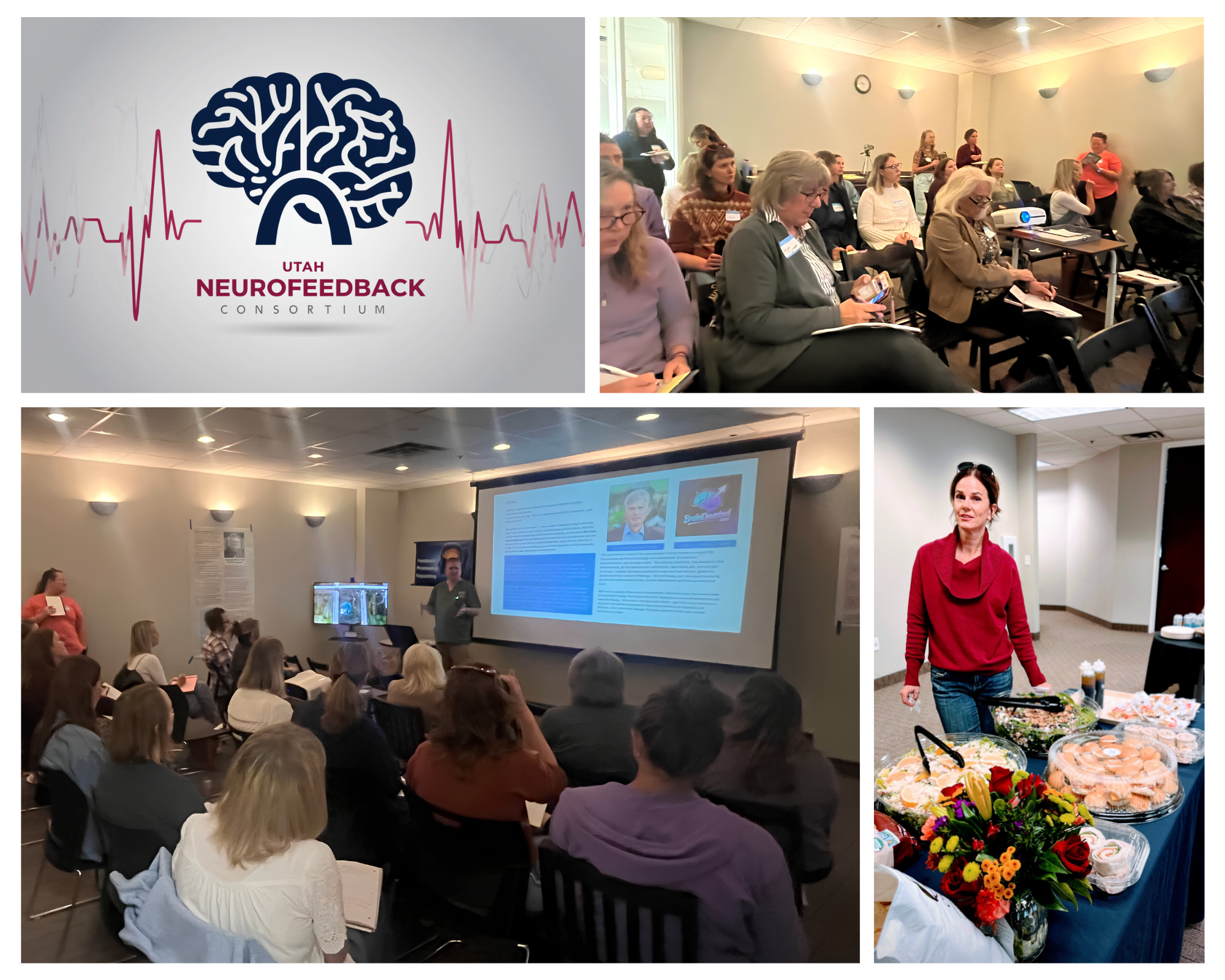
Today, the group meets twice per year in person and twice virtually, with ongoing communication between meetings.
How the Group Functions
The Utah Neurofeedback Consortium is intentionally open and inclusive, bringing together practitioners at many stages of experience, including:
- Longtime neurofeedback clinicians and early adopters
- Practitioners integrating neurofeedback into broader clinical work
- Technicians and newly trained providers
- Clinicians exploring neurofeedback for the first time
There is no cost to participate, and the focus is on accessibility and shared learning.
A central part of the group is a practitioner directory, originally organized as a shared spreadsheet. It includes location, contact details, populations served, insurance information, and clinical focus areas, making it easier for members to refer clients to one another across the state.
The group has also begun exploring tools to better organize ongoing communication, including forum-style platforms for discussion, questions, and referrals.
Learning Together
Each meeting creates space for clinicians to share directly from their clinical experience.
Common discussion topics include:
- Clinical observations and sharing helpful resources
- Supporting neurofeedback advocacy/awareness in the larger community
- Emerging neurofeedback research
- Training and certification pathways
- Integration with other therapeutic approaches
- New tools and evolving methodologies
Guest speakers are also regularly invited, often through member connections. These have included clinicians and educators contributing perspectives on ILF applications, frequency band approaches, and broader developments in brain-based research.
In some cases, speakers have traveled at their own expense to contribute, reflecting the strong spirit of collaboration within the group.
The Impact of Community
Beyond education, the consortium provides something equally important, connection. The success of groups like the Utah Neurofeedback Consortium has also sparked a broader conversation about how practitioners can connect with one another locally.
For many clinicians working in private practice, neurofeedback can feel isolating. This group helps bridge that gap by creating a consistent space for peer support, shared experience, and trusted referral relationships.
As one clinician shared, the most meaningful impact has been simply knowing who to call and being able to confidently refer clients to colleagues who understand the work.
These kinds of communities often begin in very simple ways. Many start with a spreadsheet, an email thread, or a small group of practitioners deciding to meet. Over time, they grow through consistency, openness, and shared purpose. In many cases, it only takes one person willing to invite others into the conversation.
As the neurofeedback community continues to grow, there is increasing opportunity to make these groups more visible and easier to find. The goal is to support practitioners in connecting with existing local communities, or starting new ones where they do not yet exist, so collaboration and peer support can continue to expand across the field.
Looking Ahead
At BEE Medic, we believe innovation in neurofeedback happens not only through technology, but through people coming together to share knowledge and support one another.
We are grateful for practitioners like the Utah Neurofeedback Consortium who are helping strengthen the field through collaboration, curiosity, and a commitment to lifelong learning.
When clinicians learn together, the entire field moves forward.
If you are looking to get more connected, we have started building a dedicated space for this through Community Neurofeedback Groups. This includes groups like the Utah Neurofeedback Consortium, along with our existing Facebook groups where practitioners gather for discussion and free Q and A sessions with experts every two months.