
Customer Story: Kim Lipperheide – From a Tennis Career to a Neurofeedback Practice
Meet occupational therapist Kim Lipperheide from Berlin!
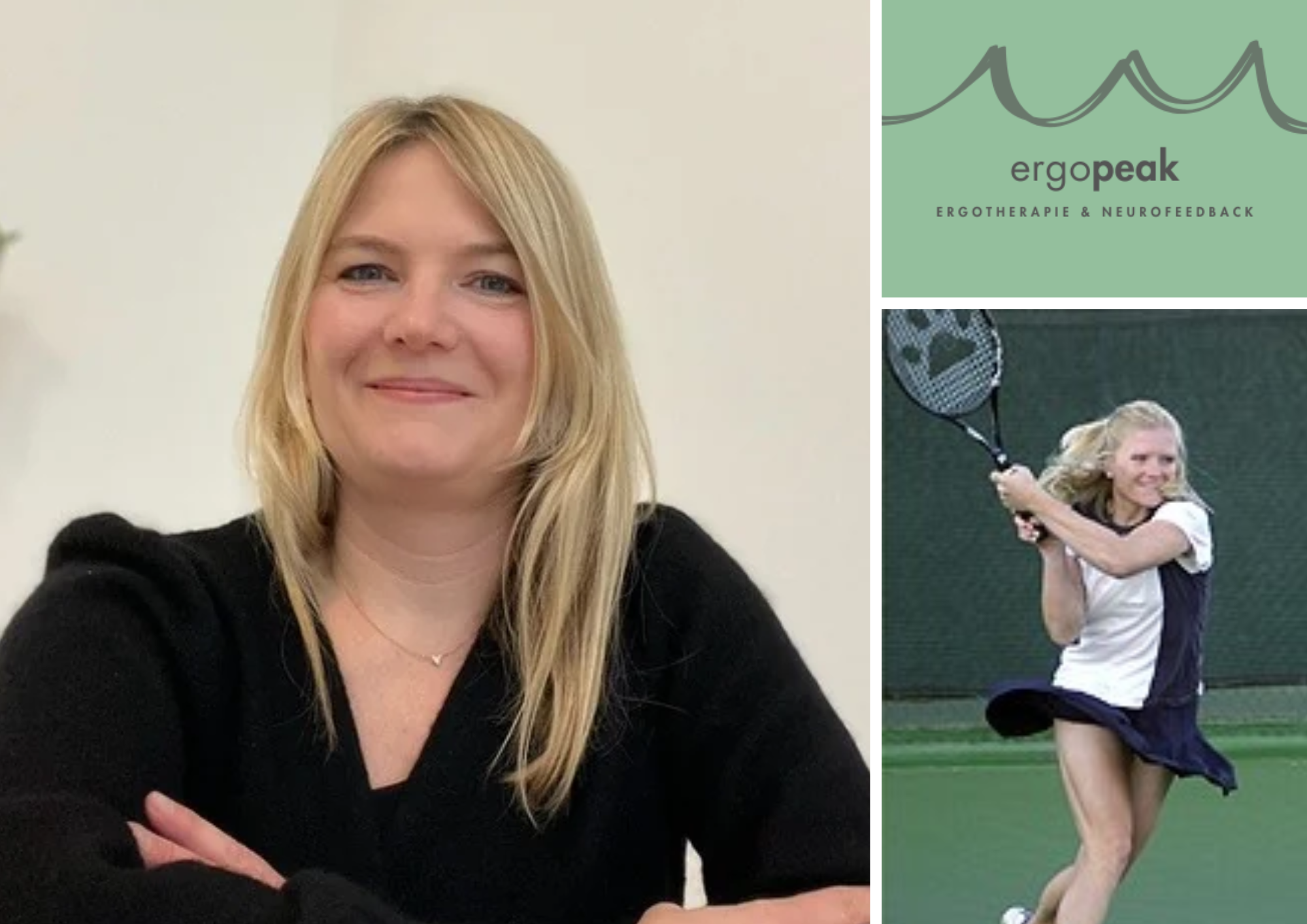
Kim Lipperheide is an occupational therapist and neurofeedback therapist in Berlin. In her practice, she primarily works with adults and adolescents, using neurofeedback specifically to support their self-regulation. Her professional journey took her from a college tennis career in the U.S., through studies in psychology and sports management, and various roles in international project management, ultimately leading her to occupational therapy. Today, she combines these diverse professional experiences in her therapeutic work. In addition to her work as an independent therapist, Kim is also a mother. Looking ahead, she hopes to establish neurofeedback in other fields where people face particular mental and emotional stress - such as competitive sports, top-level management, and the arts and politics.
From the World of Sports to Occupational Therapy
After graduating from high school, Kim moved to California, where she spent seven years thanks to a tennis scholarship. During this time, she achieved great athletic success: she was named an All-American three times and at one point reached No. 1 in the NCAA college rankings in doubles and No. 8 in singles. Alongside her active tennis career, she worked as a coach at times and initially studied business administration. A course in criminology ultimately sparked her interest in psychology. She subsequently earned a bachelor’s degree in psychology and was recognized as a Psychology Honors Student. This was followed by a master’s degree in sports management.
Back in Germany, Kim initially worked in international project management and was involved, among other things, in organizing pharmaceutical and medical conferences as well as a World Athletics Championships. Over time, however, she realized that she missed direct contact with people. An inspiration from her professional circle ultimately led her to occupational therapy. In 2014, she began her studies in occupational therapy in Berlin, which she completed with the state examination and a bachelor’s degree.
During her subsequent professional work, Kim first encountered neurofeedback. The method quickly piqued her interest, leading her to complete her neurofeedback training at BEE Medic in Potsdam in February 2020. Today, neurofeedback is an integral part of her therapeutic work and forms the focus of her own practice.
Neurofeedback at the Heart of Her Work
Her therapeutic services are aimed at clients with ADHD, migraines, sleep disorders, and trauma. Kim reports that a particularly high proportion of her clients are women—including working mothers and, increasingly, freelance actresses. Their daily (professional) lives, in particular, are often characterized by changing demands, emotional intensity, and particularly stressful situations. Neurofeedback offers them a way to strengthen their self-regulation and better cope with the challenges of their professional and daily lives.
Her clients are increasingly coming to her through medical referrals and inquiries from social-pediatric centers (SPZ). The fact that neurofeedback is also gaining increasing attention in the medical field is evident in Kim’s daily practice: “I’m now receiving more and more targeted referrals from doctors who are considering neurofeedback as a non-pharmacological treatment option for ADHD.” What Kim particularly values about her work is the individual progress of her clients. She is interested not only in whether their initial symptoms change but also in what other positive developments emerge over the course of the training. She is convinced that neurofeedback “should become part of our self-care. After all, better-regulated brains make life—regardless of whether a diagnosis exists or not—more worth living and easier.”
That’s why Kim sees potential applications for neurofeedback not only in a therapeutic context but also in the realm of high-performance sports. “Neurofeedback isn’t just for people who come to the practice with specific symptoms. Especially in competitive sports or acting, it can also be about supporting one’s own performance and self-regulation,” Kim explains.
A Vision: Neurofeedback in Competitive Sports
Kim’s own experiences in competitive sports also shape her future plans. Neurofeedback is already being used by some international teams and athletes. Kim would like to help raise awareness of the method in German competitive sports and explore further applications. Through her contacts in Berlin’s sports community, she sees interesting opportunities to do so. However, one challenge she still faces is gaining access to professional teams and the relevant decision-makers.
“I’d like to work more extensively with neurofeedback in the field of competitive sports. One possible approach would be to first get those in charge excited about the method. If they experience neurofeedback for themselves, they can better assess its potential and subsequently make the method available to their teams,” Kim explains her vision. On a personal level, she has also remained loyal to tennis. She uses neurofeedback herself and continues to play actively and successfully on a women’s 30s team.
Her own practice will remain an integral part of her professional life. Because as exciting as new applications for neurofeedback may be, she wouldn’t want to miss out on the individual support she provides to her clients.
Collaboration with BEE Medic
Kim has been using BEE Medic’s systems since she first started her own practice. In addition to the wide range of training options, she particularly appreciates how easily neurofeedback can be integrated into her daily practice routine.
Technical support also plays an important role for Kim in this collaboration. She especially values the telephone support and personal advice provided by the technical hotline.
When it comes to animations, she likes to use a variety of options. Among her favorites are the Advanced Media Player, Dreamscapes—especially the Wilderness landscape—and Innertube. Particle World is also already on her wish list.
About Kim Lipperheide’s Practice
At her practice, ergopeak, in Berlin-Friedenau, Kim Lipperheide combines her experience in sports, psychology, and occupational therapy with her specialization in neurofeedback. She works with adults and adolescents with a variety of concerns and develops individualized training approaches tailored to their personal needs and goals. Patients with public or private insurance, as well as self-pay patients, are welcome.
Kontakt
ergopeak - Ergotherapie & Neurofeedback
Kim Lipperheide
📍 Wielandstr. 32, 12159 Berlin
📞 Tel.: +49 177 506 80 72
🌐 https://www.ergopeak.com/