"If someone had told me a year ago that my son Andreas would one day become a bookworm, I would have shaken my head in disbelief."

06. May 2021

The article appeared in the "VdK Zeitung" on 06 May 2021. With over two million members, the VdK Deutschland e.V. is the largest and fastest growing independent social association in Germany. With 1.7 million copies per issue, the "VdK Zeitung" is the highest-circulation member magazine in Germany.

You can read the full article in German on the VdK website

The article briefly discusses how neurofeedback works and how it can be used for dementia, migraine, tinnitus, ADHD and autism.

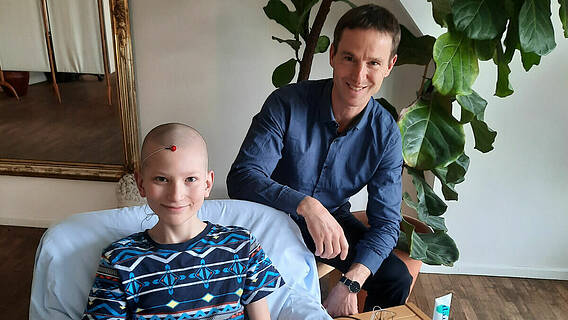
Gernot Wührer with his patient

"If someone had told me a year ago that my son Andreas would become a bookworm, I would have shaken my head in disbelief," says Susanne Lenz* from the Munich. The 13-year-old has a reading and spelling disorder. "Andreas is dyslexic. He has difficulties in quickly grasping the words of a text correctly. His brain builds in mistakes somewhere," Susanne Lenz explains. Before the boy started with neurofeedback training a year ago, reading caused him great problems. Today, the mother experiences her son as a real avid reader.

Thanks to computer-assisted neurofeedback therapy, Andreas who is autistic is making progress not only in reading, but also in his social life. "I observe that he has become more open towards people," says the mother.


Article: Experience with neurofeedback in therapeutic practice

31. March 2021

In the current issue of the German-language professional journal for occupational therapists "Praxis Ergotherapie" our collegues Dr. Siegrid Seuß and Jennifer Riederle published the results of a survey among 260 neurofeedback therapist, mainly occupational therapist. They asked them about their use and experience with neurofeedback in daily work.

The publisher's announcement states:

"Neurofeedback is a therapy method to improve the regulatory capacity of the central nervous system. Clinical studies are investigating the effects of neurofeedback in various indications. In addition, practical experience is an important component in the evaluation of the method. 260 neurofeedback therapists – mostly occupational therapists - were interviewed about their experiences in daily practice. The analysis illustrates the variety of applications, positive and undesirable effects, and arrives at a positive risk-benefit ratio."


48% of the survey participants were occupational therapists. Furthermore professionals in the field of psychiatry, psychotherapy and psychologe (30%) and from other therapeutic working prefessions (22%) participated. All of them are working with ILF Neurofeedback and the results are impressive.

85% of respondents rated neurofeedback as an "essential tool for effective treatment of their patients." Positive effects of neurofeedback mentioned included improvement in sleep, attention, mood, and emotion regulation and impulse control.

When asked to assess the risk-benefit ratio of neurofeedback, 96% of respondents rated it as very good or good.


You can read the complete article in German-language in the current issue 2/2021 of "Praxis Ergotherapie" available from 01.04.2021.

Or read the articel here.

For more details please feel free to contact us. The authors will be happy to answer any questions you may have.

Cover Praxsi Ergotherapie Ausgabe 02/2021

What does Neurofeedback do for the brain in stress and mental illness?

30. March 2021

We are all familiar with stress and mental strain from time to time. However, mental stress is on the rise - especially now during the pandemic. 

In a short article in today`s edition of the German newspaper "WELT", we show you how Neurofeedback can help.

The article is only available in German.


Interview with Gernoth Wührer - The importance of language to human development

09. February 2021

"The importance of language to human development cannot be emphasized enough. It was language, with its tremendous flexibility and richness of meaning, that enabled us to communicate with one another in the first place." (Harari, 2015). 

Language is a fundamental component in child development. When suffering from a so-called language development disorder, communication, language comprehension, vocabulary and language formation or several of these areas are affected. 

In his practice in Munich, the psychologist Gernot Wührer treats, among others, patients with language development disorders. In this interview he reports on how neurofeedback can help. 

Gernot, how did you come to work with speech development disorders? 

I cooperate with a speech therapist who works mainly with children from the autism spectrum as well as children with a migration background who often do not learn the German language properly until kindergarten. This colleague has been integrating neurofeedback into the treatment of her patients in addition to speech therapy for some time. Speech therapy can be very challenging for the children and demand a lot from them - especially when the speech disorder is accompanied by problems with attention, concentration and impulsivity. 

We experience that children with motivational problems as well as children from the spectrum strengthen their cognitive-emotional abilities through neurofeedback. Thus, they also achieve faster progress in speech therapy. The children are more motivated, more concentrated and can engage better in therapy - in individual cases, children have needed up to a year less therapy through the combination of neurofeedback and speech therapy and have also quickly caught up on large developmental delays.  


Language development disorders are a large field. Is neurofeedback indicated equally in all of them? 

It is usually the complex cases and developments for which we additionally recommend neurofeedback, for example if, in addition to speech errors, the understanding of or the relationship to language is also affected. But in general, neurofeedback is a brain training that helps to improve the children's flexibility and performance - everyone can benefit from it. 

The children in my practice are mostly kindergarten age. This is where non-age appropriate language development is usually first noticed, but I also work with school-aged children, adolescents, and adults, especially those with autism spectrum disorders. The problems I observe in practice range from systematic grammatical errors to lack of complex sentences up to problems with language content. Children with autism may also only have limited communication, not speak at all or only be able to make sounds. 


What can neurofeedback do in the therapy of language development disorders? How does it contribute to improvement? 

Neurofeedback, as a concomitant therapy to speech therapy, has a positive effect on speech development disorders in at least three ways. 

First, it strengthens cognitive-emotional conditions and improves parameters like attention and concentration in an implicit and playful way. For example, children who receive accompanying neurofeedback training find the work phases in speech therapy easier. They can work concentrated for a longer time, don't give up as quickly, and also increasingly find joy in it because they don't just have negative experiences with languages, but are increasingly strengthened in their abilities. This is what I would call the non-specific effects of neurofeedback. 

In addition, there are the positive effects that neurofeedback has on the children's everyday life. Family life often calms down a bit, because parents also quickly notice behavioral changes in their children - this can lead to everything from better sleep to longer independent play and less bedwetting. This also eases the burden on parents and raises the quality of life for everyone involved.

Thirdly, neurofeedback also has specific effects on language: for me it is a great success when, in the course of therapy, the children begin to form longer sentences, tell something out of their own motivation or start a conversation. I also notice an increasing verbality, an enlarged vocabulary or differentiated sound formation. Especially if you choose specific electrode positioning for speech in neurofeedback and train there, such results become obvious, while the other two non-specific effects often show up even in the typical initial positions, especially with interhemispheric training. 


What are your experiences with neurofeedback in speech development disorders and what feedback do you receive from patients and parents? 

The children often perceive neurofeedback as an "easy" therapy - they are allowed to come to me and, unlike in speech therapy, have no explicit pressure to speak, but are allowed to watch a movie while exercising their brain - this is a helpful setting for children who have had negative experiences with language. 

I am convinced that they benefit especially  from the interdisciplinary approach when neurofeedback is used alongside speech therapy - and the therapists benefit from a better anamnesis and close observation. Many parents who bring their children to me for neurofeedback pay for this treatment themselves - but they see quick progress and are therefore happy to invest in their children's development and language. In addition, they are normally grateful to have found a therapy option that does not require medication and thus usually has no side effects. 


What is particularly important when using neurofeedback in language development disorders? 

For me, good and sound training as a neurofeedback therapist is central. The treatment of language development disorders goes far beyond the basic positions in neurofeedback. Often the electrode positions have to be fine tuned and it has to be clinically assessed which symptom and which position should be treated first. For this, therapists should already have neurofeedback experience. Furthermore, close observation of the patients is essential - especially if they are not able to communicate verbally, signs of over- and underactivation have to be recognized quickly and the training frequency has to be adjusted. However, from my experience especially young children react very sensitively and clearly to frequency changes already in the session - for changes between sessions, dialogue with parents and other treating therapists is essential! 


Congratulations to the winners!

16. December 2020

Thank you very much for your active participation in our book raffle. Many of you "not only" took part, but also sent us personal messages, telling us about treatment successes and enthusiastic patients, and that you no longer want to miss neurofeedback in your practice. Of course, this was not decisive for winning the book raffle, but we are very happy about this feedback.

But now we will tell you who can look forward to an exciting neurofeedback reading over the turn of the year:

One copy of the book "Neurofeedback. Theoretische Grundlagen - Praktisches Vorgehen - Wissenschaftliche Evidenz" from Ute Strehl have won:

  • Marina Staudachter, EEG-Neurofeedback Praxis in Effretikon, Switzerland
  • Christoph Schneider, Psychotherapy practice Schneider in Kassel, Germany
  • and Antje Malchow for the whole team of Rummelsberger Diakonie in Altdorf, Germany


A copy of the book„Restoring the Brain” from Hanno W. Kirk goes to:

We wish all winners an exciting read! 

There will certainly be new opportunities again next year! We wish you a Merry Christmas and come into the New Year healthy, refreshed and with confidence!


The perfect literature for the winter - Take part in our book raffle!

17. November 2020

What could be more pleasant than making yourself comfortable in the cold season and reading a good book? Especially when you have to stay at home anyway and can update your Neurofeedback knowledge at the same time? We make this thought even more beautiful by giving you just such a book as a present! Take part in our pre-Christmas book raffle!


Among all customers and newsletter subscribers we raffle the book:
"Restoring the brain" by Hanno W. Kirk published in 2020 in 2nd extended and revised edition

Here you can find a short book review

christmas gifts
Participation is very easy

Subscribe to our newsletter here and tick the box to enter our book raffle.

You are a customer and already receive our newsletter? Just send us an e-mail to [email protected] and you will be entered in the prize draw. You can participate until 10th of December 2020 inclusive!


What happens then?

The winners will be informed of the prize by e-mail as soon as possible. Please note that we will then also need your address details so that we can send the book to you before Christmas! One entry per person is possible. However, you are very welcome to inform interested colleagues about this promotion and thus perhaps increase the chances that a copy of the book will soon be available in your practice.


Further information on the conditions of participation

It is not possible to pay out the prize in cash to exchange or transfer it to other persons.

Employees of the BEE Medic GmbH and affiliated companies as well as employees of the companies providing the prize are excluded from participation. Furthermore, all persons who are or were employed in the creation or processing of the competition as well as their spouses or life partners.

We would also like to point out that the competition and the prizes are voluntary services on our part, for which the same scope of warranty and liability does not apply as, for example, in the case of purchase of the raffled prizes independent of the competition. Detailed conditions of participation and information on data protection can be found here.


World Occupational Therapy Day on 2020/27/10 - “Neurofeedback makes my work even more exciting”

27. October 2020

In a growing number of occupational therapy practices, Neurofeedback is already established as a solid treatment method. However, many occupational therapists also doubt whether the “technical” neurofeedback fits into their everyday work. Being said, occupational therapists can even get some reimbursement from the health insurance and healthcare system for neurofeedback therapy in countries like Germany. In an interview, lecturer Thomas Theis reports what inspires him about neurofeedback, how neurofeedback can be integrated into occupational therapy and why occupational therapists in particular bring the perfect conditions for neurofeedback.

World Occupational Day

Thomas, why did you become an occupational therapist? 

I have come through personal experiences for occupational therapy. Being younger, I suffered a complex injury to my arm – a disaster for me as a musician. I've been in treatment for a long time and have tried many therapies and found that occupational therapy really helped me. In occupational therapy, I was forced to use my arm again – not like in physiotherapy for stretching or exercises – but for real things - like darts, weaving or shuffle cards, that I enjoyed as a young person. I  experienced a mind-changing moment: I realised that my condition will not improve if I do not use my hand and this knowledge has awakened my passion for occupational therapy. 


What do you love about your profession? 

There’s this saying, you also often find on coffee mugs “I‘ve become an occupational therapist because being a superhero isn’t a real job.” 

For me, there is nothing missing in this profession. Occupational therapy is characterised by versatility, complexity and individuality. As an occupational therapist, I have to look at my patients with a mindful eye, I need to find out where problems exist and work together with them towards a solution or compensation of their problems. Not only are the patients making progress, but also one as an occupational therapist grows and develops at all levels. Occupational therapist is a meaningful and helpful profession that is incredibly fun. In addition, entrepreneurial independence has always been my big goal – managing my two practices to me is the  fulfilment of this goal.


What are your biggest challenges at work? 

At the moment, the relocation of my practices is the biggest logistical challenge, and the pandemic has, of course, also confronted us with problems, which we are managing through together. With a large team in practice, it never gets boring, we also have a long patient’s waiting list. Therapy continues and patients must be given full attention. The treatment of individual patients can also be challenging as for example I am currently combining neurofeedback and solution-oriented conversations in the treatment of a severely traumatised patient. 


How can neurofeedback be integrated into occupational therapy? 

Neurofeedback can be used in occupational therapy as a method of choice to achieve the medically prescribed therapeutic goal. A combination of neurofeedback with other therapeutic methods is also possible in order to help patients to sustainably improve their everyday competence. One has to remember, of course, that the individual neurofeedback procedures differ from each other. In my view, methods such as Infra Low Frequency (ILF) neurofeedback, which help to improve self-regulation, are particularly well suited. And I say this, knowing them very well. They help to sustainably improve everyday behavior and competences and, as a resource-related approach, are particularly suitable for occupational therapy. I now use neurofeedback for many indications. Also patients are very interested in the method. 


Do occupational therapists bring the right conditions for neurofeedback training? 

Thomas: From my point of view, occupational therapists bring the perfect conditions for neurofeedback. Especially in symptom-based ILF neurofeedback, clinical observation of the patient’s state and behavior is very important. You have to pay particular attention to body physiology, breathing and mimic in order to detect signs of for example tension and relaxation,to adapt the treatment protocol accordingly. Occupational therapists are usually very trained in clinical observation and therefore a very important professional group in neurofeedback. 


What would you advise occupational therapists that consider working with neurofeedback? 

My advice for occupational therapists who want to offer neurofeedback is: Pay attention to a good and well-founded training, start slowly and try it out before you start treating complex cases . Take advantage of further education and training like advanced courses - as well as supervision with experienced colleagues. 

Neurofeedback is an instrument that can make your everyday work in practice even more exciting. Colleagues, who have been initially concerned about technical devices in therapy, also like to work with neurofeedback now. It also keeps the therapist mentally fit and awake because you constantly keep an analytical view of the patient and have to register small physiological changes quickly. Working with neurofeedback is a lot of fun for me and I also know many colleagues who are excited by neurofeedback and offer it as a solid treatment along the other existing therapy methods in occupational therapy.


Learn more about Thomas Theis from his lecturer profile on EEGInfo

The interviewer was Jennifer Riederle, Psychologist at BEE Medic


Patient information about Neurofeedback for your practice marketing — what matters

12. October 2020

In considering the flood of information about health services via the Internet, Apps and brochures, it is more important than ever to provide patients with specific and well-founded information. Patients' need for information is particularly high for Neurofeedback. After all, ‘What exactly happens if electrodes are attached to my or my child's head?’ is a more than justified question. However, reliable, comprehensible information is hard to find and serious medical offers are difficult to distinguish from those that are not. The patient flyers of BEE Medic offer a very good opportunity to explain Neurofeedback to your clients in a professional and understandable way.


Practical marketing — support for individual communication with patients

Practice marketing is not at all an easy task for many health professionals and therapeutic working groups. Always in a tense relationship between the economic necessity to market modern health services on the one hand and the regulations of advertising and competition law and the adherence to professional guidelines - which have to be considered - on the other hand. After all, health is our highest good and it is not appropriate to deal with promises of salvation lightly.

Certainly no easy terrain. The among PR and marketing professionals in Germany much quoted marketing principle  "Do good and talk about it", which goes back to a booktitle from 1961, is not so easy for practices to realize.

At this point, however, it should also be said that individual and active communication with the patient is the top priority for practices. No marketing tool in the world can replace empathy, your professional skills and direct communication with patients.

Neurofeedback is also a therapy method that is difficult to understand for a large proportion of patients. ‘What happens exactly with me?’, ‘Why do we need electrodes at the head?’, ‘Does it hurt?’ (here, for the sake of completeness: No, it does not) are typical questions. And especially in the field of mental health and working with young patients, personal communication is your most important means of building trust.

We are happy to support you with professional, targeted information. Patient flyers are a particularly simple and at the same time very efficient way of informing patients about your Neurofeedback services and giving them an initial orientation.

But how do you recognize good patient information?
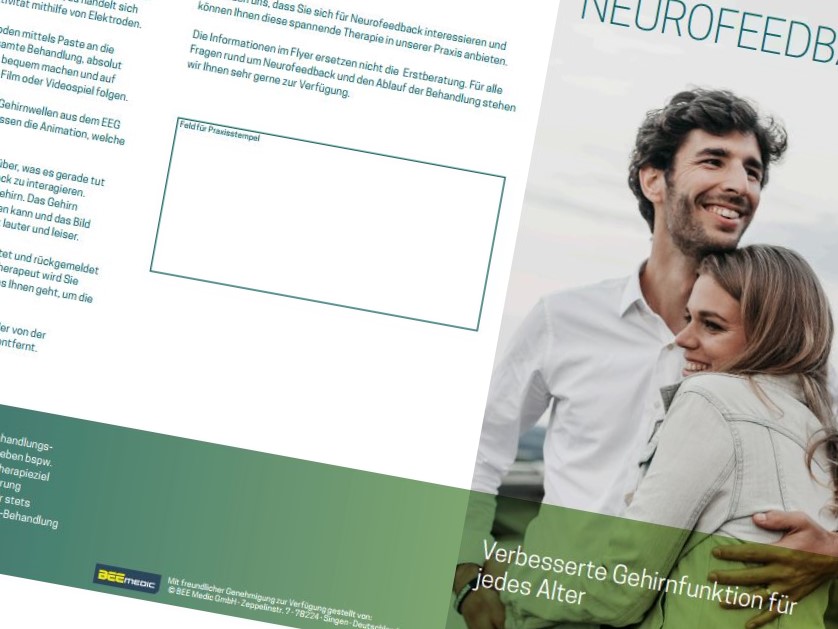
Neurofeedback Patienteninformation von der BEE Medic GmbH
Neurofeedback Patientenflyer der BEE Medic GmbH
Patient information - what is important

In short: Good information to patients focuses on patients and their questions rather than on a specific device, manufacturer or brand. You — not patients — need the therapeutic know-how, the advantages and details of a particular process or Neurofeedback system and the knowledge to integrate it in the therapeutic process.

Therefore, the information we provide to patients does not focus on any of our brands or products. Rather, we look at the following aspects:

  • How does the neurofeedback session work?
  • How does neurofeedback actually work?
  • Are there any requirements for neurofeedback therapy?
  • What do I have to consider during the therapy?

This information is complemented by references to important indications and specific therapeutic objectives.

You receive meaningful materials that support you in active patient communication and convey relevant knowledge to your clients in a short and understandable way.


Neurofeedback explained in an accessible way - here you can obtain up-to-date patient information

Customers of BEE Medic GmbH can order the Neurofeedback patient information directly via the webshop. The following patient information is currently available in the form of flyers in German and English:

  • Neurofeedback — improved brain function for all ages
  • Neurofeedback in ADHS — Information for ADHS patients and their families

A field for your practical stamp allows you to individualise the flyers. We would also be happy to provide you with a digital copy. Please contact the customer services of BEE Medic GmbH at [email protected] or [email protected].

Study proves: just one session with ILF Neurofeedback results in significant changes in brain connectivity!

10. September 2020

For the first time a randomized, controlled study has shown effects of Infra Low Frequency Neurofeedback (ILF Neurofeedback for short and also known as the Othmer method), on connectivity and brain activity - and this after only a single session. The study by Dobrushina et al. entitled "Modulation of Intrinsic Brain Connectivity by Implicit Electroencephalographic Neurofeedback" thus makes an important contribution to a better understanding of the mechanisms and processes of ILF Neurofeedback. “This confirms what we see in daily practice and what patients telling us: that ILF Neurofeedback has effects even after only one session,” says Dr. Bernhard Wandernoth, Founder of BEE Medic GmbH.

Dobrushina et al. (2020). Modulation of Intrinsic Brain Connectivity by Implicit Electroencephalographic Neurofeedback. Frontiers in Human Neuroscience, 14:192


Detection of a change in brain connectivity by 30 minutes ILF Neurofeedback

The human brain consists of about 100 billion nerve cells, which form extremely complex networks via so-called synaptic connections. neuronal compounds (connective) develop and change dynamically. Every functional change in the brain is accompanied by changes in the connectivity of nerve cells. Using functional magnetic resonance imaging (fMRI), Dobrushina and colleagues have now been able to show for the first time that ILF Neurofeedback modulates significant changes in brain connectivity.


Investigation on 52 probands

The 52 healthy probands completed a 30-minute ILF Neurofeedback session (electrode position: T4/P4) in a double-blind, controlled experimental design. Half of the test persons (control group) received sham Neurofeedback, in which the animations were generated randomly and were not the result of brain waves. Before and after the Neurofeedback session, the activity of neuronal networks in the brain was recorded in all subjects using functional magnetic resonance imaging (fMRI) at rest.


Special feature of ILF Neurofeedback: Implicit processing of the feedback signal modulates neuronal networks and increases connectivity

A special feature of ILF Neurofeedback is that the feedback signal is not consciously altered but implicitly processed, which is assumed to modulate neuronal networks involved in the self-regulation of the brain. A comparison of the fMRI images before and after ILF Neurofeedback shows the activation of a network of several regions in the brain, which is associated with the implicit Neurofeedback process and is formed immediately after the ILF Neurofeedback session. Some of the regions involved in the network have key functions in processes of control, visual perception and implicit learning. In addition, post Neurofeedback recordings show increased connectivity between brain regions associated with stimulus perception (salience), speech and visual networks, i.e. multi-sensory information processing and integration. This increased connectivity is only seen in the experimental group but not in the control group, suggesting that the increased connectivity is an effect of Neurofeedback.


An important milestone in the understanding of Neurofeedback

"The work of Olga Dobrushina is an important basis for further studies. The result is significant, is being appreciatively discussed by high-ranking neuroscientists and a follow-up study has already started", says Dr. Bernhard Wandernoth and continues: "Of course, I am especially pleased about the confirmation of what drives us every day, what we have been observing for years and what we get back from therapists and patients. After all, it has always been our goal to develop Neurofeedback procedures and technologies in a way that we achieve the greatest possible effects, so that patients and therapists are enthusiastic. The study now makes an important contribution to further research into the mode of action of Neurofeedback and the development of explanatory models. Above all, the study also shows the role of ILF Neurofeedback and the potential of this individual and effective Neurofeedback approach. We will continue to push the development of modern neurofeedback. Most importantly, the study also shows what role ILF Neurofeedback is playing and the potential of this individual and effective Neurofeedback approach. The fact that we can look back to 35 years of intensive cooperation between clinicians, scientists and developers and which has resulted in empirical clinical work of hundreds of thousands and more Neurofeedback sessions, have now succeeded in gaining a first impression of what Neurofeedback actually does in the brain. And this is definitely a milestone for a better understanding of Neurofeedback in general.”

6 reasons for online Neurofeedback training

18. August 2020

The increasing digitalization brings us many advantages in everyday life. However, especially when it comes to e-learning and in particular to professional and medical training, there are often concerns as to whether further education can really work online. 

With the online courses with training providers accredited by us, we have already convinced numerous of our customers. Of course, this is also a question of character, but with the following six reasons for digital learning, we would like to show you the advantages of online courses.

1. The technique: Online training works easily

When it comes to digital learning, questions about technical equipment often arise first. "Is my technical knowledge adequate to complete the course?", "Do I have the necessary technical equipment ?" and "What software do I need?" we are often asked.

This is not surprising, because especially in the field of mental health you work primarily with people and not on the PC. And a few years ago you might have had to install programs. Fortunately, this is no longer necessary today.

To take part in an online course you only need a PC or laptop with a steady internet connection. Of course, a webinar software is still required to allow several people to participate in a online course at the same time. You will see, we make sure that everything works perfectly. You do not have to worry about it.

When selecting the webinar software, we therefore pay attention to the following aspects:

  • You do not need to install or download new programs or special software
  • You simply need an internet connection and you will receive a link from us which will take you to the course with just one click
  • We only use professional, well-proven software
  • And we pay attention to the protection of your data

Technical support is available during the whole online course and can be reached at any time by phone, chat or e-mail. And for a relaxed start on the course day, we usually offer individual "pre-tests" 3 days before the course, in which a support employee checks the technology with you and shows all functions such as video and microphone settings.

Nahaufnahme Person am Laptop während eines Webinars

2. Special group dynamics in the online course

Learning together connects. Everyone of us knows that. Usually you quickly notice if you feel comfortable in a course, with the lecturer and with the other participants and a specific group dynamic develops.

This is exactly what happens online, too. Because most participants may have already attended a webinar, but only have little experience with online courses lasting several days. This brings people together automatically. And often getting to know each other via monitor is very interesting: you are curious to see how the others are doing, you will be proud when everything is running smoothly and you gains insights into other practices and rooms - which can be more exciting and personal than coming together at a "neutral course location". Despite the physical distance, there is a fairly personal exchange, because you give insights into your personal environment and at the same time your are feeling very familiar.

At any time during the course you can see the lecturers and, depending on the screen settings, the other participants; you can talk and ask questions - just like in a face-to-face meeting. The advantage is that you can also deactivate your camera at any time.

3. online learning with a varied course concept

With the online courses with training providers accredited by us, you don't have to sit in front of your PC or laptop all day. Apart from presentations, the online course also includes:

  • discussions
  • workshops in small groups in virtual classrooms
  • film sequences
  • and the practical training

And of course there are regular, sufficient breaks, which you can spend at your favourite Italian restaurant around the corner. You can stretch your legs, do little things, greet the children from school or exchange ideas with other course participants.

4. Planning reliability and time savings

Online courses offer you planning security. The courses take place regardless of any regional or national travel or assembly restrictions or quarantine requirements. You also minimise your risk of infection. In particular, you save time by eliminating travel time. You will not have to travel the day before the course, which is usually necessary, nor will you have to make the return journey after several days, which is often considered to be particularly long. In addition, the cost of food and accommodation is reduced compared to a location-bound course. Rather, you can also process what you have learned in familiar surroundings after the individual seminar days.

5. Free use of the Neurofeedback equipment during the whole course

During the online courses, you practise with the Neurofeedback systems of BEE Medic GmbH, the NeuroAmp® amplifier and Cygnet® Neurofeedback software. In advanced and indicator-specific courses, you usually already have a system in place and can easily use it for the practical part, as well as for local courses, where many participants usually have their own system. For the Neurofeedback online basic courses, you can buy a complete system before the course starts. The advantage is that you can practice during the course and you can start immediately after the course in your practice. You can also borrow a free complete system for trying and testing during the course.

6. Train several employees or colleagues with little effort

Online training courses are ideal for group practices and if you want to learn neurofeedback together with colleagues. Several employees or colleagues can be trained simultaneously. The time off for the course can be well planned and is limited. There are also no costs for travel and accommodation. In 2020 you will also benefit from an attractive discount campaign.

Get more information and book now

E-learning in the medical field may still be new to many people, but you can see that there are also some arguments in favour of digital learning. Innovative e-learning concepts guarantee personal exchange and professional education at a high level.

In our course overview you will find numerous online courses for 2020, ranging from one to two-day advanced courses to our 5-day Neurofeedback Basic Courses, which you can either complete in one go or on two consecutive weekends.


Subscribe to Current News